How to lie face down comfortably during a massage with your neck straight
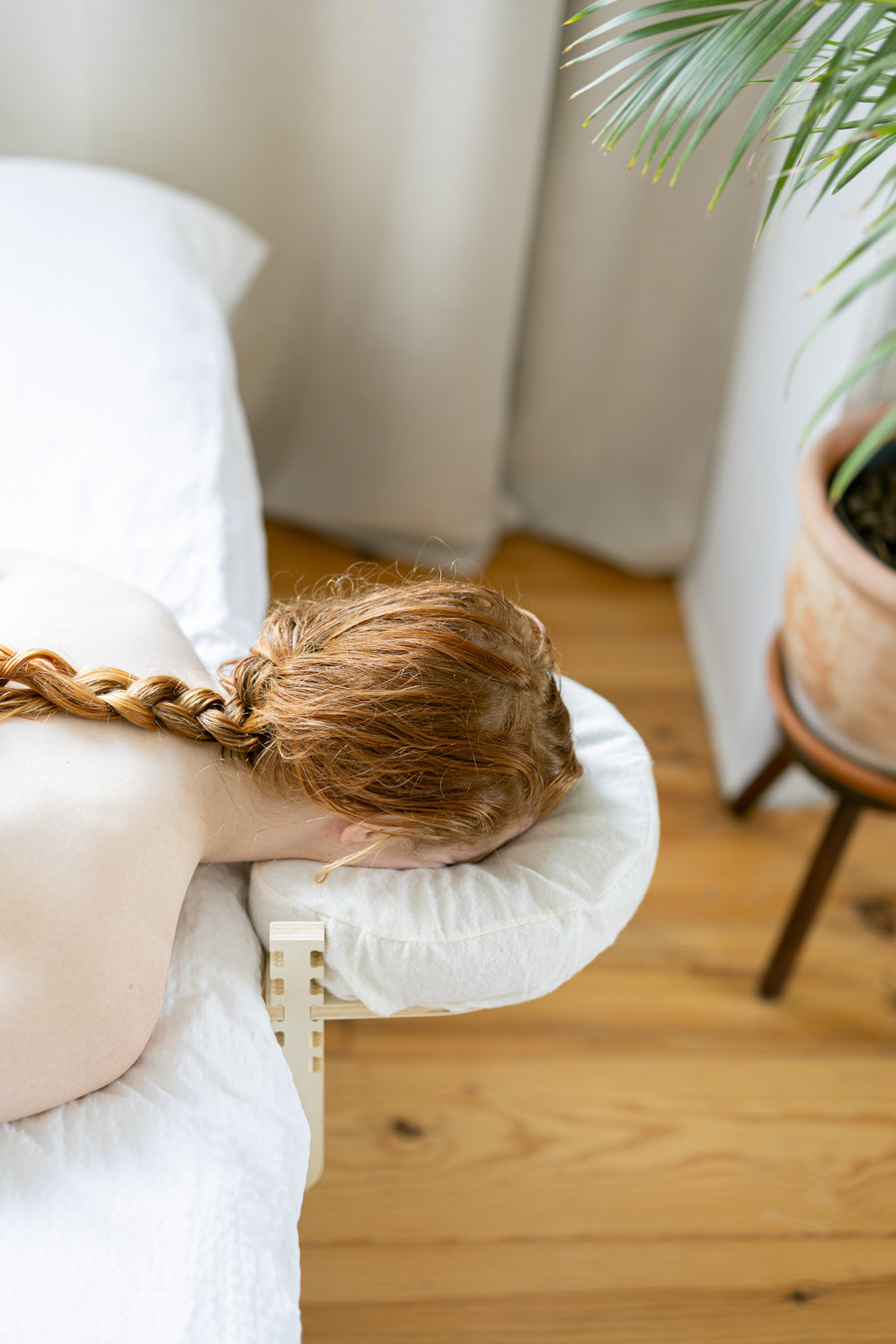
Lying face down on a bed does not have to mean keeping your head turned. The right support lets the neck and face settle more naturally.

Face-down positioning makes the back easy to reach, but an ordinary bed has nowhere for the face. Turning the head sideways is the usual compromise. That may work briefly, yet it keeps the neck rotated while the rest of the body is meant to relax.
What a neutral position means
In a neutral position, the head and neck remain broadly in line with the torso. They are not held in strong rotation, flexion or extension. Ergonomic organisations use this principle because muscles and connective tissues need less unnecessary effort in a balanced position.[2] The UK HSE also treats visibly bent or twisted neck positions as an ergonomic risk when they are repeated or sustained for a meaningful part of a task.[3]
Four signs that the position needs adjusting
- You keep wanting to turn your head from side to side.
- Your chin is pushed towards the chest or points upwards.
- Your nose or mouth touches the mattress or a closed pillow.
- You tense the shoulders to hold the head in place.
Why clear breathing space matters
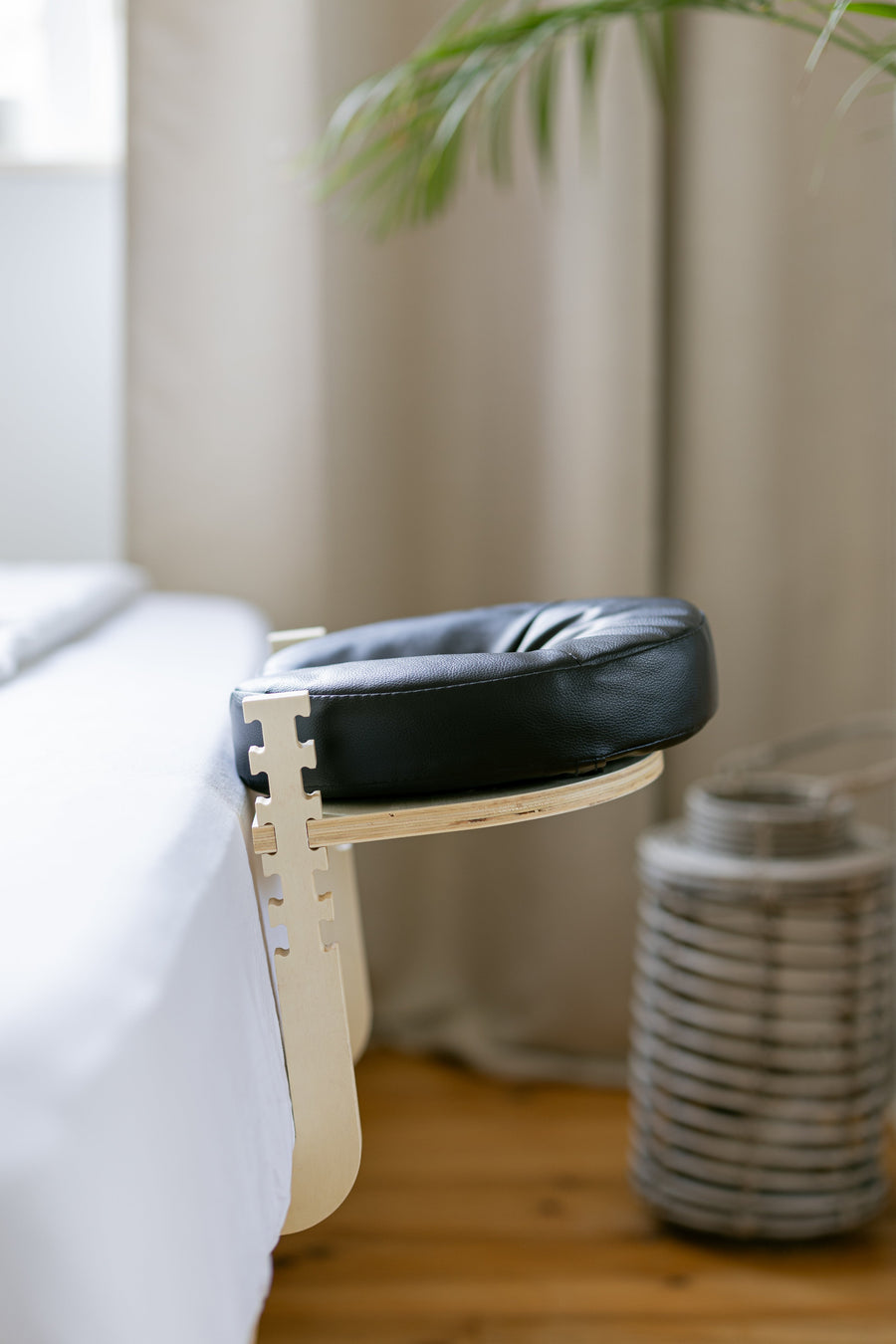
A horseshoe-shaped face cushion supports the forehead and cheeks while leaving the centre open. Before the massage begins, make sure the nose and mouth are completely clear and no firm edge presses on the eyes, bridge of the nose or jaw.
A good position often feels noticeably quiet: you do not need to hold your head, the shoulders can drop and breathing remains easy.
How to set up a face-down position on a bed
- Slide the Ezspa foot fully beneath the mattress and secure the cushion on its platform.
- Choose a starting height close to the top surface of the mattress.
- Lower yourself gradually and place only light weight on the cushion at first.
- Ask someone to check the line from head through neck to upper back.
- Change one height setting at a time and compare the feeling.
- Rest the arms by your sides, on the bed or forward, whichever lets the shoulders relax.
Supporting the rest of the body
Some people enjoy a thin cushion beneath the ankles. If the lower back feels tense, a small soft cushion beneath the pelvis or abdomen may help. Use only support that feels immediately comfortable, and stop if there is pain, tingling or difficulty breathing.
When to change position
A massage does not need to happen entirely face down. Turn onto the back for the arms, hands, face or front of the legs. Side lying may suit someone who cannot lie prone. The Ezspa set is most useful during the part of the session when the back and shoulders need to remain accessible.
From improvised to repeatable
Ezspa places the open cushion on an adjustable base beside the mattress. The face gets space and the neck can remain straighter without keeping a massage table at home. Once the preferred height is known, the same position is quick to recreate.[1]
How the Ezspa Bed Massage Set fits
If you no longer want to choose between a turned neck and pressing your face into the mattress, Ezspa offers five height settings and an open cushion for a calmer prone position.
Sources
- Canadian Centre for Occupational Health and Safety, Working in a Sitting Position: Basic Requirements Deze arborichtlijn beschrijft een neutrale, in lijn liggende houding van hoofd en romp als de houding met de minste belasting op spieren en gewrichten; de richtlijn gaat over zitten op het werk, niet over liggen tijdens een massage, maar het onderliggende houdingsprincipe is hetzelfde.
- UK Health and Safety Executive, Assessment of Repetitive Tasks (ART) Tool Deze beoordelingstool voor herhalende bewegingen op de werkvloer rekent een duidelijk gedraaide of overstrekte hoofd-nekhouding mee als risicofactor; ook dit is een arbeidsrichtlijn, hier gebruikt om aan te geven wat als een ongunstige nekhouding geldt, niet als uitspraak over massage zelf.
All links checked on September 13, 2026.